Ep 08 - David Morczinek: Machine Learning at MIT to Entrepreneurial Growth and Fundraising Success.
Episode Summary
David Morczinek, CEO of Airworks, discusses his journey from aerospace engineering at Airbus to co-founding a geospatial AI company at MIT. He explains how Airworks uses computer vision to analyze aerial data from drones, satellites, and aircraft, pivoting from pure automation to a hybrid service model when customers struggled with AI adoption. The conversation covers fundraising progression from friends-and-family to private equity, balancing technical innovation with market readiness, and building a sustainable company culture.
Pull Quotes
“We realized pretty quickly that there was too much of a depth change from going from 100% manual to 100% automated. We decided we can capture more value if we help the industry get there by layering on services as quality control.”
“The best business is one that hires two or three people and turns that into a $50 billion company. But AI is expensive—you need a lot of data, processing power. The problem we're solving cannot be solved without AI.”
“Building a company is a marathon. I took a conscious decision that if I'm not in the right shape mentally and stable in life, I won't be able to do this for the next five to ten years.”
Transcript
Hi welcome to Tales From The Sky Lounge. It's a podcast about business consulting and venture investing. We get out there in the world and we talk to people who are making it happen in the tech industry and we get their stories.
So today in the Sky Lounge we have David Moraté. Hi David, welcome to the Sky Lounge.
Hey Todd, great to be here, excited about this conversation.
Awesome. Well David, why don't you tell us a little bit about your background and how you came to be CEO at Airworks?
Yeah, absolutely. So today I'm obviously CEO of Airworks, which is a geospatial AI company. We analyze aerial data of any sort—aircraft data, drone data, satellite data, even LIDAR data—and convert that into intelligence for businesses to take better decisions. This is pretty close to my background. I've always been an aerospace guy. I actually went to school to study aerospace engineering in Europe, in Germany. I was always fascinated about planes and how they connect cultures, how they allow people to meet each other all around the world, and how they allow us to consume goods from all different places in the world. So I really wanted to just learn more about aviation and flying and became an engineer.
Want to go deeper?
Work With MeRelated Episodes

Ep40—Steve Subar—Business Model First, Product Second: Thirty Years of Building Smarter
Steve Subar, serial entrepreneur and inventor of the Mat Fresher automated yoga mat cleaning machine, discusses his business-model-first approach to company building. He shares lessons from 30+ years of entrepreneurship, including founding Open Kernel Labs (acquired by General Dynamics) and emphasizes validating product-market fit cheaply before building products, the importance of experience over information, and innovating business models alongside technology.

Ep 39—Neal Miller-Decades of Financial Strategy Across 70 Companies and Still Going
Neil Miller, a partner emeritus at Tech CXO with 19 years at the firm, shares his journey from public accounting through CFO roles at multiple public companies to fractional executive work. He discusses his involvement with 70+ companies including Cloud Sherpas and Boomtown, offering insights on fundraising challenges, the fractional executive model's value during economic uncertainty, and how AI is compressing business cycles while changing capital requirements.
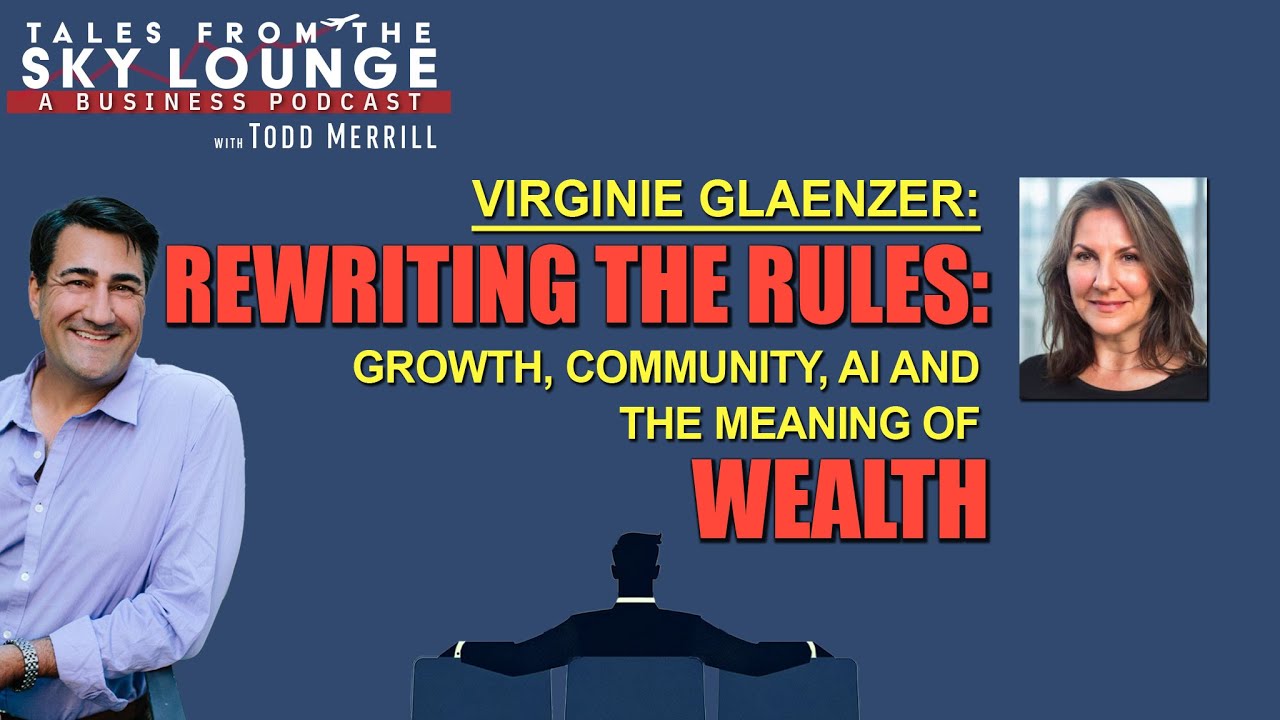
Ep35 — Virginie Glaenzer: Rewriting the Rules: Growth, AI, Community, and the Meaning of Wealth
Virginie Glaenzer, a fractional CMO and author, shares her journey from Paris to Silicon Valley in 1998 with four suitcases and no English, building tech companies through the dot-com era. She discusses AI's transformative impact on business, the shift from scarcity-based to abundance-based thinking, and why future-proof brands must build communities into their DNA rather than treating them as marketing tactics.