TFTSL Excerpt—Episode 06 - Mike Blake's Trip to Russia
Episode Summary
Mike Blake recounts his chaotic first trip to Russia in 1993 as a 23-year-old hired to run a USAID privatization program. After missing his flight in Frankfurt, he navigated visa complications, outdated Soviet aircraft, and ultimately accepted hospitality from self-proclaimed smugglers who helped reunite him with his contact in Minsk.
Pull Quotes
“They hired me because they needed a Russian-speaking MBA who wasn't a native speaker—someone who spoke with a heavy accent and made mistakes but still knew business.”
“I blamed it all on the Germans because I knew that would play with the Russians—'The Germans screwed me just like they did back in 1941.' That was enough to get me a visa.”
Transcript
Hey, it's all about travel here in the Sky Lounge. You got any good airplane stories to tell us?
So my favorite story is right out of school. I dropped out of graduate school at Northeastern in Boston to take a job to run a privatization program for USAID and Brown University. They hired me because they needed a Russian-speaking MBA, and they needed a Russian speaker who was not a native Russian speaker because a native Russian speaker back then would never be accepted. They'd be considered carpet baggers. They had to have somebody that spoke with a heavy accent that made lots of mistakes but still knew something about business. I hardly knew anything, but they hired me.
I flew over and stopped off in Germany for a week, and then went to get my flight in Frankfurt and I missed it because I got lost in the German subway system. I speak many languages, German is not one of them. Even though I was actually still ten minutes early, the Germans left early, so I was pretty ticked. I freaked out a little bit because there were no cell phones in 1993. There's no way to contact somebody in real time. My plane was just going to get there and they had no idea where I was.
The next plane to Minsk was in two days, so Lufthansa shoved me on a flight to Moscow, mainly to get rid of me, I'm sure. They stuck me on a plane to Moscow. I made it to Moscow, but I did not have an entry visa for Russia, only Belarus. So I get to the visa station and I was desperate. I was tired, I was scared, I was frustrated, and I basically blamed it all on the Germans because I knew the one thing that back then would always play with the Russians was blame it on the Germans. The Germans screwed me just like they did back in 1941. That was enough that they gave me a visa, and somehow they gave me credit for my incomplete flight so that I could then take an internal flight from Moscow to Minsk.
I transferred over to the domestic airport and I waited twelve hours for that flight, wondering what was going to happen next. I finally got on that flight on what must have been a million-year-old aircraft, a Tupolev 134, a knockoff of our L-1011. Back then on Soviet planes it was like a bus. There were no assigned seats. You just got a ticket and you found a seat and that's where it was. As the American, they put me on the plane last, and my seat was next to a passed-out Russian soldier. He was completely out but he was taking half of my seat.
Want to go deeper?
Work With MeRelated Episodes
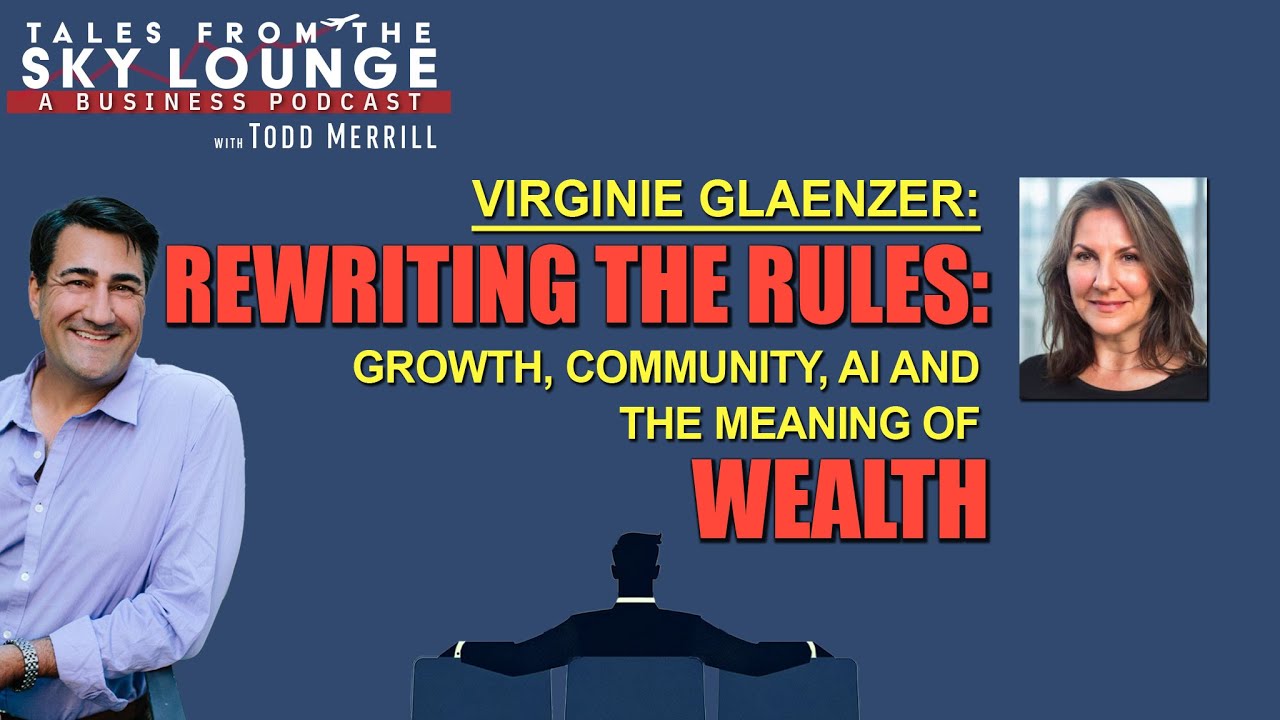
Ep35 — Virginie Glaenzer: Rewriting the Rules: Growth, AI, Community, and the Meaning of Wealth
Virginie Glaenzer, a fractional CMO and author, shares her journey from Paris to Silicon Valley in 1998 with four suitcases and no English, building tech companies through the dot-com era. She discusses AI's transformative impact on business, the shift from scarcity-based to abundance-based thinking, and why future-proof brands must build communities into their DNA rather than treating them as marketing tactics.

Ep24 Alan Gold—Sales, Marketing, and AI: How to Survive, Scale, and Avoid Stagnation
Alan Gold, a fractional CMO and sales consultant with 30+ years in technology marketing, discusses the evolving landscape of sales and marketing in the AI era. He covers M&A market dynamics, hiring and developing sales talent, the critical importance of strategy over tactics in marketing, and how companies can break through growth plateaus by finding adjacent markets and refining their differentiation.

Ep22 Antonio Pagano—Phishing, AI Scams, and the Ever-Intensifying Cybersecurity War
Antonio Pagano, CTO and co-founder of Symbol Security and founder of Wano, discusses the evolving cybersecurity landscape with a focus on phishing attacks enhanced by AI. He shares how AI enables more sophisticated social engineering, domain spoofing, and grammatically perfect phishing emails that bypass traditional detection methods. Pagano also covers his journey building two companies—a Colombian software consultancy and a cybersecurity SaaS platform—while maintaining work-life balance and learning from sports and continuous education.