The CEO Is the Salesperson: Why Founders Can't Hand Off the Pitch | Jen Bonnett, Ep 49
Episode Summary
Jennifer Bonnett, a longtime tech entrepreneur and former ecosystem builder at ATDC and Invest Atlanta, discusses her transition back into technology through AI experimentation. She shares lessons from building a search engine in 1997, her current work vibe coding consumer apps with Claude, and her philosophy that CEOs must personally sell for at least the first year before delegating. The conversation explores how AI is lowering barriers to entrepreneurship while emphasizing that founders still need strong networks, customer discovery skills, and the discipline to market early.
Pull Quotes
On why founders cannot delegate sales early
“The CEO is a salesperson. Founder CEO sells. That's their job. They have to sell the rest of the team. They have to sell the investors, and they have to sell customers for the first probably year.”
“You can't teach somebody else to sell your vision if you can't do it yourself. Right? And that's a problem that a lot of founders get into. And they're like, I didn't know I was going to sell, man.”
On ChatGPT's public launch
“I was shocked that they released it to the public. My theory was Google, and these folks have had AI and machine learning agents running behind the scenes, engines running behind the scenes to do what they do in their own business. And the fact that somebody decided to open the kimono and ship it to the public was the thing that I found shocking.”
On when vibe coding becomes someone else's job
“At some point, don't you have to become CEO? You could become a CEO, you have to deal with partnerships, you have to deal with investors, you have to deal with customers, you have to deal with employees, and that's where your focus has to shift.”
On convincing city government to pilot AI
“I'm like, hey, what if we just use public data? Like, everything on our website is public data. Our website is way too complex. What if we use it to simplify Q&A, you know, FAQs for a little agent that you could talk to and get answers from the website, since we have, you know, a 4000-page website with all these different policies and stuff.”
Transcript
Todd Merrill:
Hi, welcome to Tales from the SkyLounge. It's a podcast about business, consulting, and venture investing. We get out there in the world, and we talk to people who are making it happen, and we get their stories.
Today's guest in the SkyLounge, Jen Bonnett. Hi, Jen.
Jennifer Bonnett:
Hi. Great to be here.
Want to go deeper?
Work With MeRelated Episodes
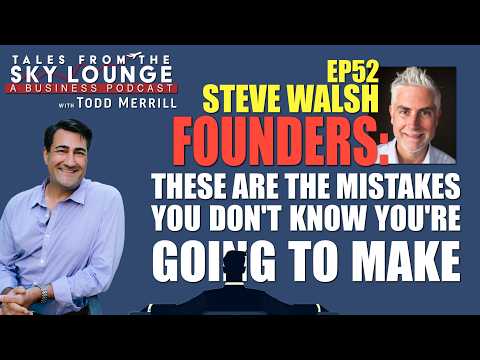
Founders: These Are the Mistakes You Don't Know You're Going to Make | Steve Walsh, Ep 52
Steve Walsh, an angel investor and startup advisor, shares lessons from 25 years building multi-billion dollar B2B divisions at Cox and Comcast before transitioning to helping early-stage founders. He discusses common founder mistakes, when to raise capital, the importance of customer validation before building product, and how he filters 6,000 conversations down to 69 investments through rigorous vetting and founder education.

Inside Secrets to Angel and Crowdfund Investing | Karen Rands, Ep 47
Karen Rands, founder of the Compassionate Capitalist Movement, discusses how individuals can build wealth by investing in entrepreneurs through angel investing and equity crowdfunding. She shares her journey from IBM intrapreneur to angel investor advocate, explains revenue-share investment models as alternatives to traditional equity deals, and outlines strategies for building diversified portfolios that generate both financial returns and social impact.

SpeedRun Ep 06 Durable Agent Writing -Tales from the Sky Lounge
A CTO demonstrates how to convert Claude Desktop prototypes into production-ready AI agents using Python, Pydantic, and LangGraph. The episode walks through extracting MCP tool configurations and system prompts from chat sessions, then generating deployable code that can run on schedules or respond to events—illustrating how agent development costs are approaching zero.